Skeleton Garden 3D SVG for Pop-Up Cards Review
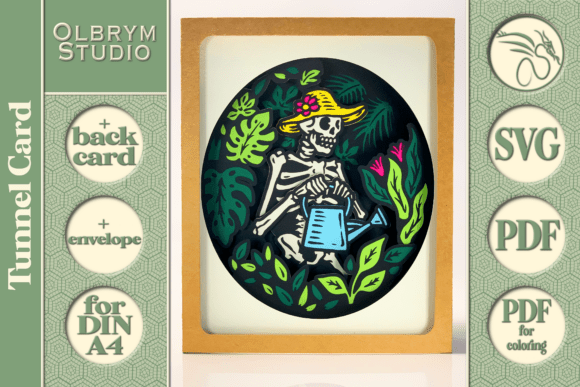
As a digital product creator constantly scouting for assets that bridge the gap between niche appeal and commercial viability, my first impression of the Skeleton Garden 3D Tunnel Card SVG was one of strategic intrigue. This is not your typical floral clipart or standard skull illustration. It occupies a specific intersection of botanical beauty and macabre anatomy, creating a visual tension that immediately signals "plant goth" or "dark cottagecore." For sellers targeting audiences who appreciate both gardening and skeletal aesthetics, this graphic design asset offers a distinct mood. It feels elegant rather than gruesome, and intricate rather than cartoonish. When evaluating this for an online shop, the primary question is whether this specific blend of horticulture and osteology translates into sellable merchandise beyond just the intended paper craft.
Evaluating Niche Appeal for Digital Products
The description targets lovers of gardens, skulls, farming, landscaping, and even radiologists. From a business perspective, this broad yet specific targeting is excellent for SEO and audience connection. However, when integrating this 3D SVG into a commercial design portfolio, we must assess its versatility. The asset possesses a vintage scientific illustration quality that elevates it above generic Halloween decor. This makes it suitable for year-round sales in the alternative stationery and dark academia niches. For Etsy sellers and creative entrepreneurs, this means the product has longevity. It is not merely seasonal; it is a lifestyle aesthetic. The challenge lies in adapting a file designed for layered paper cutting into other profitable digital downloads without losing its structural integrity.
Adapting Tunnel Card Files for Merchandise
While the Skeleton Garden 3D Tunnel Card SVG is engineered for pop-up cards, experienced sellers know that maximizing ROI requires repurposing assets. I tested this design across several product categories to gauge its commercial flexibility:
- Sublimation Design and Apparel: The intricate line work translates surprisingly well to t-shirt designs and tote bag prints. Because the original file is vector-based, scaling it up for apparel does not result in pixelation. However, sellers should consider simplifying the innermost layers for fabric printing to ensure readability from a distance.
- Printable Wall Art: By removing the fold lines and tab markers inherent to tunnel cards, the central illustration becomes a stunning standalone printable design. Framed against a cream or charcoal background, it serves as sophisticated nursery art for biology-loving parents or decor for a home greenhouse.
- Canva Template Integration: For those selling editable templates, this asset works beautifully as a decorative corner element or a focal point for botanical event invitations. The transparency of the PNG export allows for easy layering over textured digital paper packs.
- Sticker Design and Planner Accessories: This requires caution. While the overall silhouette is strong, the internal detailing of the skeleton and plants may be too fine for standard die-cut stickers. Sellers might need to create a simplified "bold" version specifically for planner stickers to prevent tearing during production.
Visual Hierarchy and Listing Presentation
In a crowded creative marketplace, thumbnail appeal dictates click-through rates. The Skeleton Garden 3D Tunnel Card SVG excels here because of its inherent depth. Even when displayed as a flat image, the layering suggests dimensionality. When creating product mockups, I recommend showcasing the asset in two distinct ways to capture different buyer intents. First, display the assembled 3D tunnel card with dramatic side lighting to emphasize the shadows and depth. Second, show the flattened vector artwork alongside a color palette to attract designers looking for clipart bundles. This dual-presentation strategy addresses both the crafter seeking a Cricut project and the graphic designer needing commercial design elements. Visual storytelling is key; pairing this asset with dried flowers or antique gardening tools in mockup photography reinforces the "cut garden enthusiast" vibe and increases perceived value.
Technical Considerations for Cricut and Silhouette Users
For sellers offering this as a cut file, technical validation is non-negotiable. A beautiful design that fails to weed is a refund waiting to happen. During testing, pay close attention to the anchor points where the skeletal structure intersects with floral stems. In some 3D SVG files, these intersections can be fragile. Before listing, run a test cut on 65lb cardstock. If the delicate ribcage details tear easily, you must modify the file to thicken those specific paths or offer a "detailed" and "easy-cut" version within your digital download zip. Furthermore, verify that the score lines are correctly assigned. Misaligned score lines ruin the pop-up mechanism and lead to negative reviews. Providing a PDF assembly guide with photos is essential for customer trust, especially for complex tunnel card structures.
Where to Exercise Caution in Product Creation
Despite its versatility, this asset has limitations that sellers must respect to maintain brand quality. Avoid using the full-detail Skeleton Garden 3D Tunnel Card SVG on small surfaces like pen wraps or jewelry tags; the complexity will turn into visual noise. Similarly, be wary of placing this detailed illustration on busy, high-contrast backgrounds. The design relies on negative space and clean lines to communicate its form. Overwhelming it with loud patterns diminishes its elegance. Additionally, if you are creating social media graphics or Pinterest pins, ensure the text overlay does not obscure the central skeletal-botanical fusion. The art is the hook; let it breathe. Finally, always double-check your commercial license. Just because a file is available for purchase does not automatically grant rights to sell it as a standalone digital asset or to use it in print-on-demand products without significant modification.
Seller Checklist for Launch Readiness
Before publishing this graphic design asset or derivatives to your shop, run through this practical evaluation list to ensure professional standards:
- Contrast Testing: Preview the design on both white and black backgrounds. Ensure the skeleton reads clearly against light paper and that the botanical elements do not disappear against dark cardstock.
- Font Pairing: Test typography combinations. A rustic serif font complements the vintage anatomical feel, while a clean sans-serif modernizes it for contemporary plant goths. Avoid overly distressed grunge fonts that compete with the illustration's texture.
- File Organization: Customers expect clarity. Organize your zip files into folders labeled "SVG for Cutting," "PNG for Sublimation," and "Assembly Instructions." Clear organization reduces support tickets.
- Mockup Realism: Use realistic shadows in your product mockups. Flat, shadowless renders make 3D SVG projects look fake and lower the perceived value of your handmade business offerings.
- Keyword Alignment: Ensure your listing tags reflect the rewritten creative direction. Instead of just "skull card," use terms like "botanical anatomy art," "gardener gift," "radiology student present," and "gothic cottagecore decor" to capture the full spectrum of potential buyers.
Ultimately, the Skeleton Garden 3D Tunnel Card SVG represents a high-potential asset for sellers willing to put in the technical verification and creative adaptation work. It bridges the gap between hobbyist crafting and professional commercial design, offering a unique aesthetic that stands out in saturated marketplaces. By treating this file not just as a single product but as a foundational element for a broader collection, creative entrepreneurs can build a cohesive brand identity that resonates deeply with the plant-loving, bone-collecting niche.